Wushu
”When people hear the word Kung Fu, that is what we call wushu in China.” – Jet Li
The real meaning of Kung Fu in China is being good at something through long practice. For example, if you have spent years cooking, you can have good Kung Fu in cooking. The connection to Chinese martial arts was popularized in the 1970s through Bruce Lee’s action films, which led people around the world to associate kung fu with wushu and martial arts.
Wushu was developed in China after 1949 in an effort to standardize the practice of traditional Chinese martial arts and has since been evolving into two main disciplines: taolu (套路, forms) and sanda (散打, sparring). Taolu consists of two main fist styles: Chang Quan (long fist) and Nan Quan (southern fist). Below you can find the styles we practice.
Wushu styles
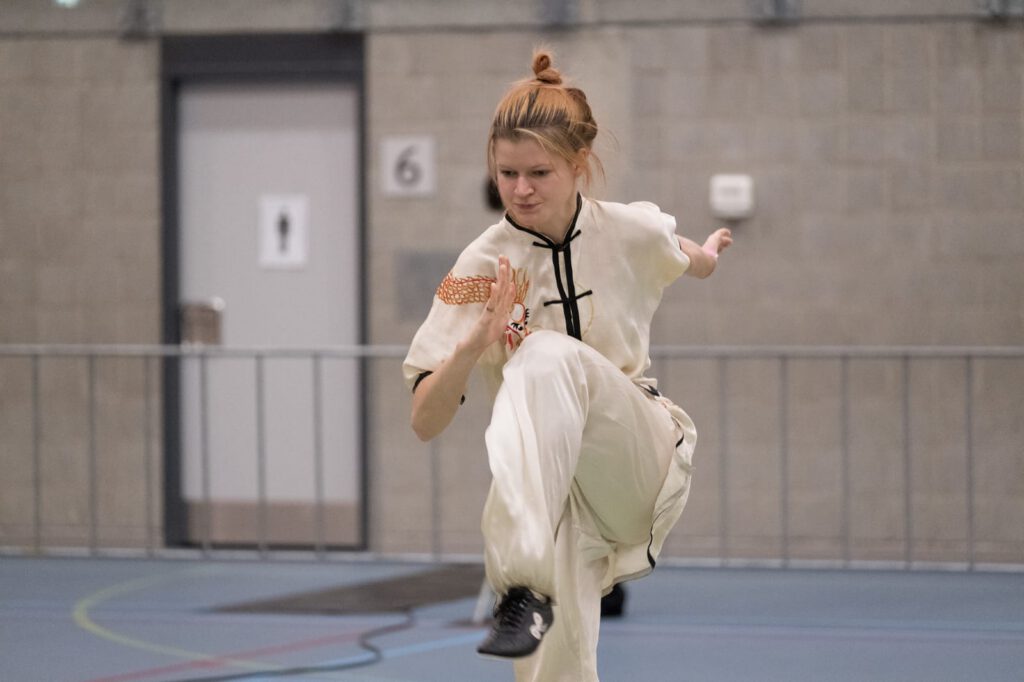
Chang quan
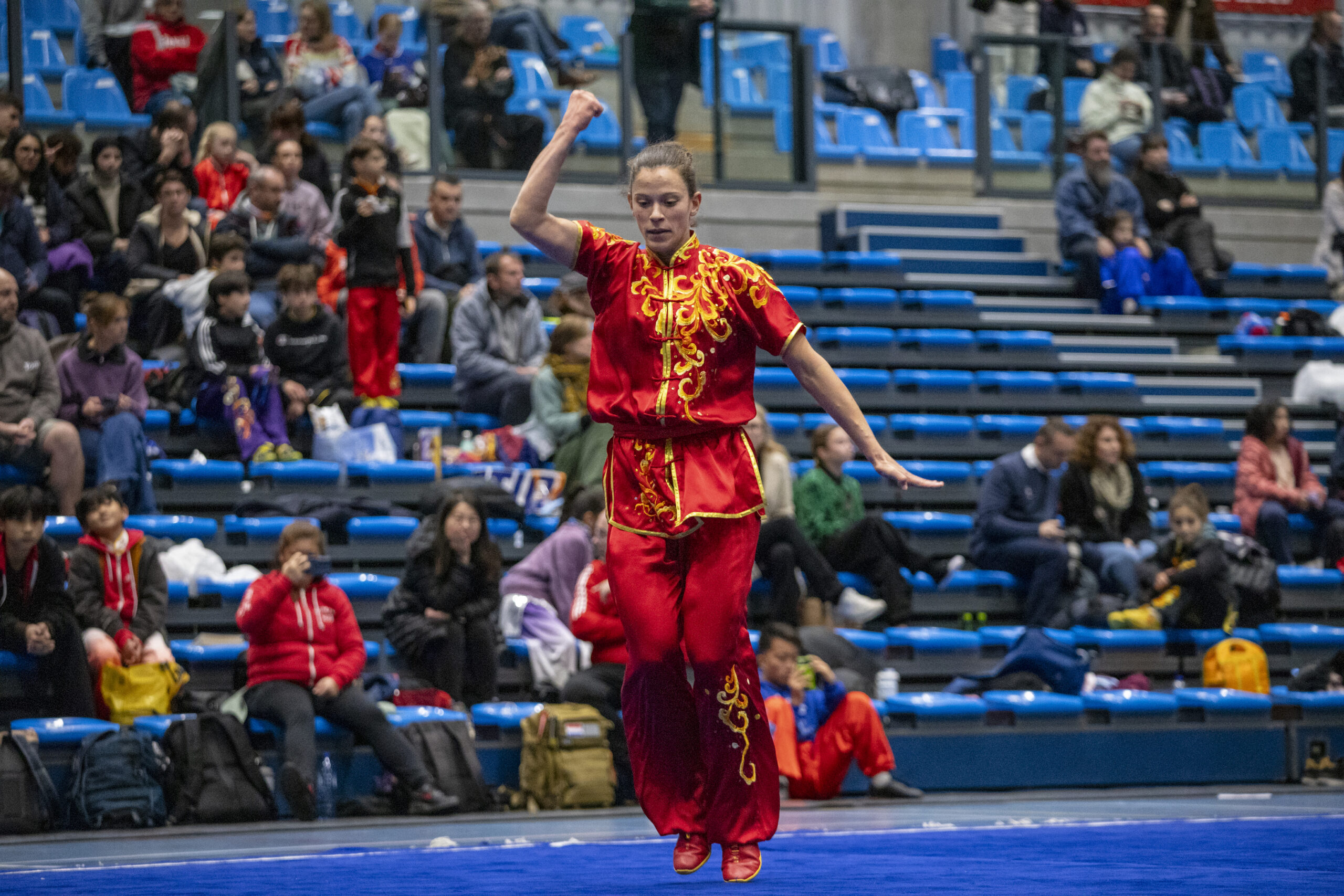
Changquan (simplified Chinese: 长拳; traditional Chinese: 長拳), also known as “Long Fist“, refers to a family of external (as opposed to internal) martial arts (Kung Fu) styles from northern China. Long Fist forms emphasize fully extended kicks and striking techniques and, by appearance, would be considered a long-range fighting system. The Long Fist style is considered to contain a good balance of hand and foot techniques, but it is particularly famous for its impressive acrobatic kicks. In demonstration events, Long Fist techniques are most popular and memorable for their whirling, running, leaping, and acrobatics. Contemporary changquan moves are technically demanding, requiring great flexibility and athleticism comparable to that of gymnastics.
Nan quan
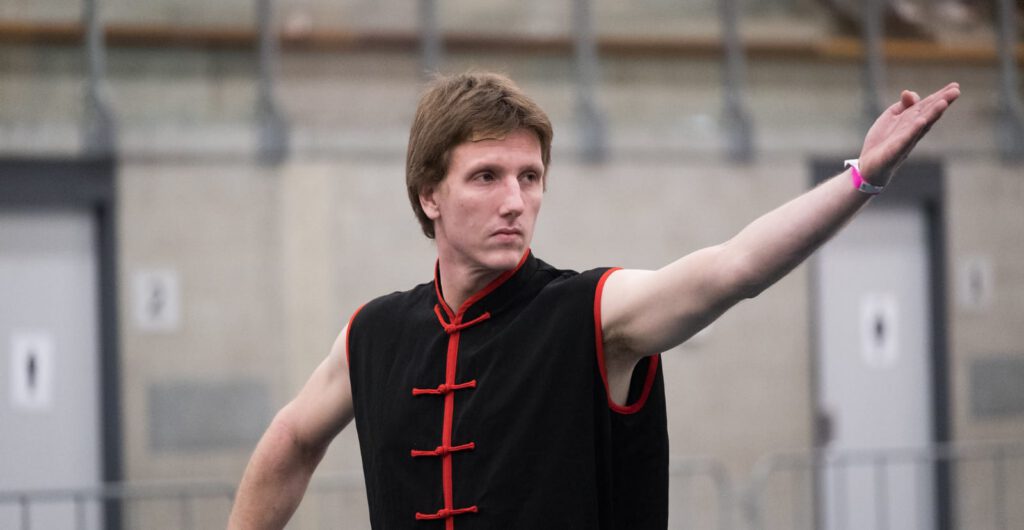
Contemporary Nanquan features vigorous, athletic movements with very stable, low stances, extensive hand techniques, and a vocal articulation called fasheng (“release shout“). It is the predecessor of the Japanese and Korean martial arts kiai. Power comes from sharp waist movements, with special emphasis on fast stance transitions to generate power and speed in the arms. Contrary to changquan, which is meant to look effortless and light, nanquan movements are more grounded and emphasize power and strength.
Weapons
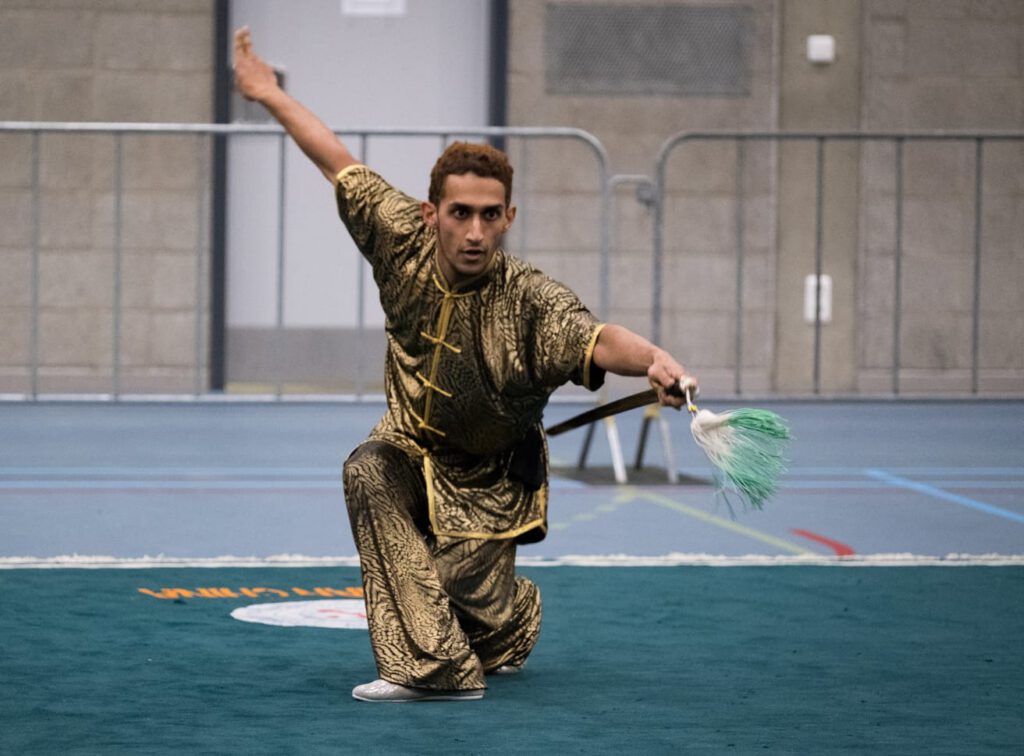
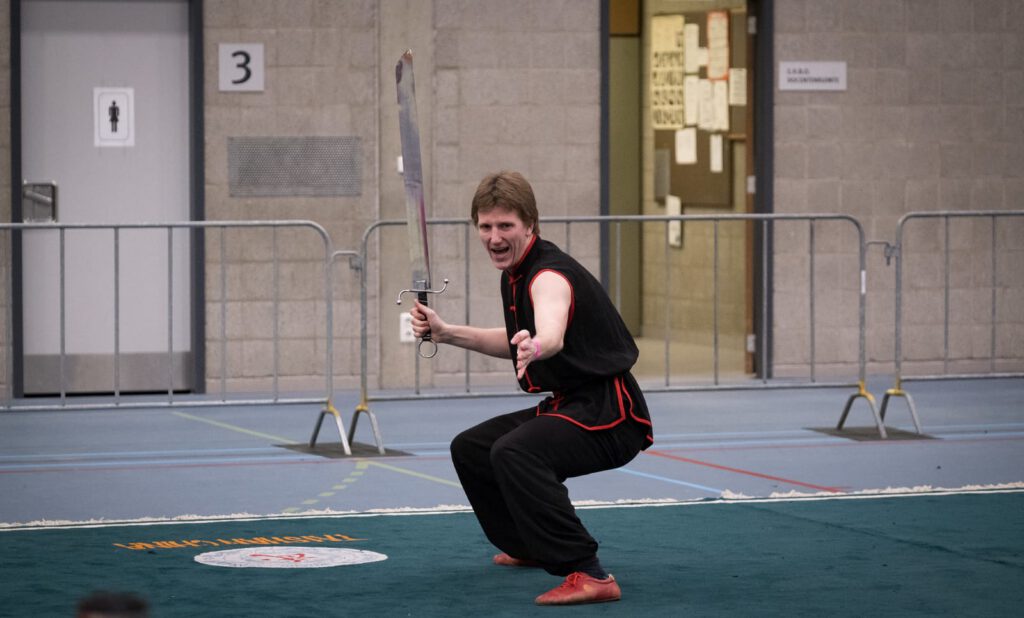
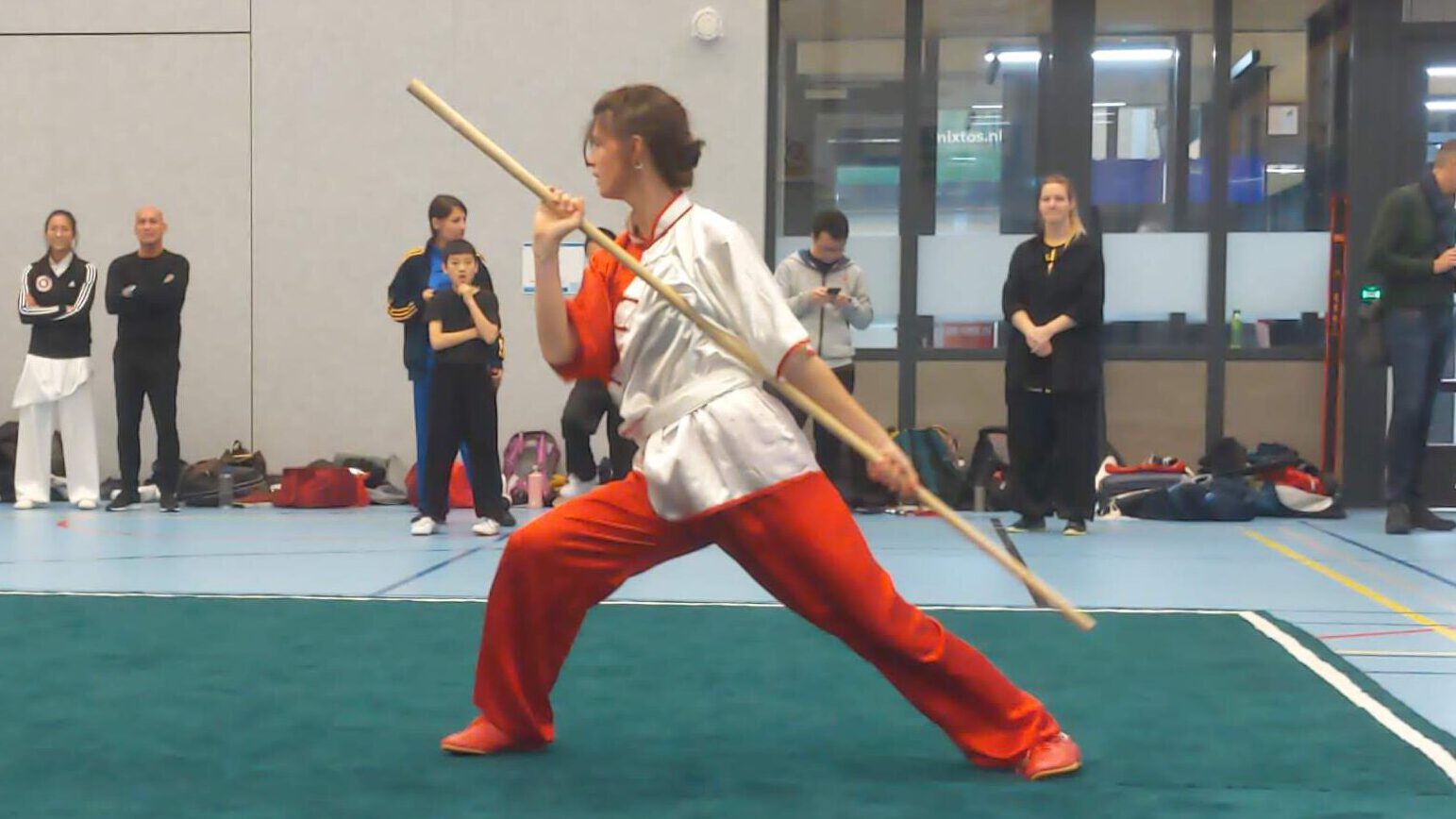
Wushu includes a wide range of traditional Chinese weapons. The weapons we train with are the straight sword (Jian 劍), broadsword (Dao 刀), staff (Gun 棍), and spear (Qiang 槍). The straight sword is a light, double-edged sword. Precision, control and fluid movements are typical of straight-sword routines. The broadsword is a single-edged, curved sword, primarily used for cutting and slashing movements. Dao routines are fast and powerful. The staff is a long wooden weapon and one of the fundamental weapons in Chinese martial arts. Sweeping strikes and quick changes of directions are combined in the routines. The spear is widely described as the king of weapons because of the skill and control required to handle its length and flexibility. Thrusts and sweeping techniques are combined with fast, flowing manipulation of the spear.
Traditional routines
Most routines practiced in wushu are new, modernized compilations of traditional routines. However, our school also teaches standard traditional routines, such as Chāquán (查拳), as a step between different levels of difficulty. Through these traditional routines, we improve our basic stances and learn more fighting movements beyond the modern routines. In addition, some of our students already have a traditional kung fu background before starting to train with us.